Queen of the May

O Mary! we crown thee with blossoms today,
Queen of the Angels, Queen of the May,
O Mary we crown thee with blossoms today,
Queen of the Angels, Queen of the May.

Bring Flowers of the Rarest” is an extra-liturgical May crowning hymn that seems to be a rather sentimental nod to the ambiguity of modern May “devotion,” and perhaps (or perhaps not) an assault upon it.  It is a preconciliar hymn that I have often heard characterized as “schmaltzy” and inappropriate for the liturgy, though I have heard it many times used in traditional circles for Holy Mass.

What interests me here is its relation to the pagan or neopagan celebrations associated with May Day, the spring festival.  The “Queen of the May” or “May Queen” is a personification of Spring which is ritualized in May Day celebrations by the selection of a young girl dressed in white and crowned with flowers who leads the May Day parade. British folklore has it that of old the ritual ended with the blood sacrifice of the May Queen. Continue reading

The Holy Grail of Pope Francis: Our Lady of Lujan and Undoer of Knots

An Argentinian silversmith, Juan Carlos Pallarols, is handcrafting a simple silver chalice for Pope Francis, which will be embossed with two images of the Blessed Mother:  Our Lady of Lujan, an Argentinian image of the Immaculate Conception, associated with a 17th century miracle, and Our Lady Undoer of Knots, a German devotion which Cardinal Bergoglio brought to Argentina in the 1980′s and has since promoted there.  The same silversmith collaborated with Cardinal Bergoglio in designing another chalice, embossed with the image of Our Lady Undoer of Knots, which the Cardinal presented to Pope Benedict shortly after he ascended to the Chair of St. Peter.

It is quite interesting that that this Argentinian pope should have a personal attraction to the German devotion.  It provides a kind of link between the two successors of St. Peter, of which there are others. Continue reading

The Marian Chivalry of St. Joseph

How does Joseph respond to his calling to be the protector of Mary, Jesus and the Church? By being constantly attentive to God, open to the signs of God’s presence and receptive to God’s plans, and not simply to his own. This is what God asked of David, as we heard in the first reading. God does not want a house built by men, but faithfulness to his word, to his plan. It is God himself who builds the house, but from living stones sealed by his Spirit. Joseph is a “protector” because he is able to hear God’s voice and be guided by his will; and for this reason he is all the more sensitive to the persons entrusted to his safekeeping. He can look at things realistically, he is in touch with his surroundings, he can make truly wise decisions. In him, dear friends, we learn how to respond to God’s call, readily and willingly, but we also see the core of the Christian vocation, which is Christ! Let us protect Christ in our lives, so that we can protect others, so that we can protect creation! . . . .

Please, I would like to ask all those who have positions of responsibility in economic, political and social life, and all men and women of goodwill: let us be “protectors” of creation, protectors of God’s plan inscribed in nature, protectors of one another and of the environment. Let us not allow omens of destruction and death to accompany the advance of this world! But to be “protectors”, we also have to keep watch over ourselves! Let us not forget that hatred, envy and pride defile our lives! Being protectors, then, also means keeping watch over our emotions, over our hearts, because they are the seat of good and evil intentions: intentions that build up and tear down! We must not be afraid of goodness or even tenderness!

Here I would add one more thing: caring, protecting, demands goodness, it calls for a certain tenderness. In the Gospels, Saint Joseph appears as a strong and courageous man, a working man, yet in his heart we see great tenderness, which is not the virtue of the weak but rather a sign of strength of spirit and a capacity for concern, for compassion, for genuine openness to others, for love. We must not be afraid of goodness, of tenderness!

Pope Francis, March 19, 2013

Catholic Encampment 2011

This year’s Catholic Encampment for fathers and sons will be conducted at Camp Canonicus, Exeter, Rhode Island, not far from the Griswold friary:

Friday, September 9 – Sunday, September 11

Click image to link to Encampment Page that includes the encamplment flyer, registration information and the registration and release form.

The image in the side bar has the link also and will remain there for the duration.

Templar Tragedy

Considering the fact that I have blogged quite a bit on the Templars in the past, I thought I might be obliged to take time out from my book to write something about the reptile, Anders Behring Breivik, who claims some kind of affiliation with the Templars.  That turns out to be more Templar baloney.

I am not going to waste much time on this, as his manifesto is revealed to be what one would expect, mostly a cut and paste of any kind of conservatism he could find to justify his racism and his plans for violent revolution.  Not that conservative thought leads to the recent events in Norway any more than liberal thought necessarily leads to the dirty deeds of Bill Ayers.

When I first read that Brievik was supposedly a “Christian Fundamentalist,” I thought to myself that he is more than likely some kind of esoteric “Christian.”  In fact, he is a Freemason, but that does not explain things either, because Norwegian Freemasonry is a “rectified rite” that has jettisoned the myth about the Templar origins of the Masons.

Brievik has founded his own “church.”   It is of a cut and paste construction, just like his manifesto: part Christian, part neopagan Odinist, part Freemason and whatever.  I would also add that his church is Nazi as well, but he says that Nazism has been so demonized that  “it is pointless to try to resurrect it in any way or form.”  His interest in Christianity is about cultural unity for Europe through the common patrimony that Christianity offers.  He says he is not interested in a relationship with Jesus.  He is interested in his Norse and European cultural and racial heritage.  And kill anyone who gets in the way.

In spite of his claim that he is a member of a larger cell, I will be surprised if that turns out to be true.  I think he is a lone nutbag, at least in terms of his terrorist agenda.

I once speculated that Europe’s choice to ignore its Christian patrimony in the formation of the European Union would result in the rise of nationalist fascism with a pseudo-Christian face.  There you have it.  Brievik has probably done what others have thought about doing but who were not crazy enough to actually do.  Europe has abandoned Christianity and that is a huge void to fill—rather it is a void that cannot be filled.  So Europe swirls with the liberal culture of death, Islamism and fascism.  Did I mention neopaganism?

The spirit of Benedict, Patron of Europe, resides in the heart of our Holy Father who, commenting on this tragedy said:

I want to again repeat my grief-stricken appeal to all to abandon forever the way of hatred and to run away from the logic of evil.

Shortly after his election to the pontificate the Holy Father explained the importance of the Patron of Europe and his relation to the name of the new pope:

he  constitutes a fundamental point of reference for the unity of Europe and a powerful call to the irrefutable Christian roots of European culture and civilization.”

His point was for the people of Europe “to hold firm Christ’s central position” in their lives.

Brievik mentions among other things the Battle of Vienna and the Feast of the Holy Name of Mary.  Unfortunately, he entirely misses the point.  Whose side is Our Lady on?   And a better question would be:  Who is on Her side?  This battle is not of flesh and blood but of principalities and powers.  Catholics need their fortitude back, but we can do without the romantic pieties of externalist chivalry.

Brievik is a chivalric fool, spouting crusading platitudes and quoting St. Bernard’s In Praise of the  New Knighthood, and then writing the following.

While being chivalrous is a good thing in ordinary day-to-day life, it will undoubtfully be fatal in any armed confrontation.

This Templar is a pure romantic.  What does he think chivalry was for, if not armed confrontation?  What he means by explaining away the purpose of chivalry is that one should not lack the pragmatism and cynicism to kill women.  Apparently, he forgot to mention the necessity of killing children in that section.  He gets all dressed up in his Templar tux:  a knight in shining armor, phonier than Lancelot.

Brievik is a self-proclaimed pragmatist, and a conspiracy nut, who in one breath ridicules conspiracy theory and then posits his own without blinking.

Brievik’s case is an example of conservative cultural engineering in the hands of a madman.  We have seen it before.  What Brievik has lacked is a charismatic personality.  He seems to have been pretty much a reclusive pseudo-intellectual who could not invest his time and energy in anything so philistine as deep personal relationships.  I guess it is easier to kill that way.

I think cultural engineering is a bad idea in anyone’s hands.  The long and the short of it is that culture is the result of organic change that takes place with the transformation of hearts and minds, usually over a long period of time with the cost of the blood, sweat and tears of a people’s ancestors.  Someone has to be willing to build a cathedral knowing that he will never see it finished.

What we need is Our Lady of Victory.  We had better be careful about what crusades we call and the drums we beat and the pseudo-elites we try to create.  Marian chivalry is a thing altogether different.

May God have mercy on the souls of Brievik’s victims and may God bring consolation to those who this killer has left bereaved.  And May God have mercy on his soul, as hard as that is to pray for.

May God have mercy on us all.

One Heart, Seven Swords: Many Hearts, One Sword

This will be my only communique for the week.  I just arrived in Maine, NY at our retreat house, and in the morning I will begin my yearly five day retreat, in solitude.  Thank God.  Please pray for me.  I will pray for you.

SF asked a question in the comment section of my recent post:  The Spirit of Mary Victrix.  It is the second time it has been asked—I received an email with the same question from someone else:

Fr. Angelo, can you explain this part of your post: “The enemies of Mary are, in a sense, transfixed with the same sword that has pierced Her heart. Her apostles know the point of that sword all too well, with memories both bitter and sweet. It is swordplay that is well-landed upon both friend and foe.”

Here is what I answered the first time it was asked:

I think of St. Luke’s (St. Simeon’s) reference to the secret thoughts of many laid bare by the piercing of Mary’s Heart (Lk 2:35).  It is a question of compassion, i.e., whether we will open ourselves to it our not.  We make ourselves vulnerable as She was when allow Her to pull down the wall that separates us from God.  When that wall comes down, the ones that separate both friends and foes come down as well.  The price of unity is paid for in the coin of compassion, and that means sorrow.  Hence it is both bitter and sweet.

Some times we write about what we know.  But sometimes we risk writing about what we do not know about what we know.

If that sounds like a bit of mystification, it is because I am mystified.  There is something there to learn, and I still have to learn it.

I would just add that when I said that the “enemies of Mary are, in a sense, transfixed with the same sword that has pierced Her heart,” I meant to say that we all suffer and largely for our sinfulness.  Our sins constitute the sword that pierced the Heart of Our Lady.  Suffering sometimes brings even the hardened to their knees and it is an opportunity for them.  Their response reveals the secrets of their hearts, especially insofar as they are challenged to accept the Mother in order to rise in compassion and generosity.  Her friends suffer also, and sometimes—all too often—with as much reticence as those who are far away from God.  That reveals their hearts too.

Over and out.

The Spirit of Mary Victrix

The Spirit of Lepanto is greater than the history in which it is rooted. The recounting of the historic of battle that took place on October 7, 1571 lends itself to the genre epic literature.  The events of that day call for a bard like Chesterton to cast words into the cadence of drum and cannon:

Don John’s hunting, and his hounds have bayed—
Booms away past Italy the rumour of his raid.
Gun upon gun, ha! ha!
Gun upon gun, hurrah!
Don John of Austria
Has loosed the cannonade.

And I still get chills, when for the thousandth time I read the words:

. . . O Lady of Last Assurance,
Light in the laurels, sunrise of the dead,
Wind of the ships and lightning of Lepanto
In honour of Thee, to whom all honor is fled.

I pray that what gives me chills is the true Spirit of Lepanto, and that it does much more than give me chills.

I have always secretly lamented the fact that the Feast of Our Lady of Victory was changed to the Feast of Our Lady of the Rosary and that the language of even the traditional collect for the present feast is void of the bellicose.  We are all familiar with the prayer.  We use it every time we pray the Holy Rosary.

I have much preferred the collect for the Mass Contra paganos (against the heathens), euphemistically englished in the hand missal “Mass for the Defense of the Church”:

Almighty, everlasting God, in whose hand are the strength and man and the nation’s scepter, see what help we Christians need: that the heathen peoples who trust in their savagery may be crushed by the power of Thy right hand.  Through our Lord Jesus Christ. . .

I really don’t question the wisdom of Holy Mother Church in this regard, but I do think that in this feast we have an opportunity to consider with a contemplative mind the Spirit of Lepanto or what Professor Roberto de Mattei calls a “category of the spirit”:

As heirs of Lepanto, we should recall the message of Christian fortitude which that name, that battle, that victory have handed down to us:  Christian fortitude, which is the disposition to sacrifice the good things of this earth for the sake of higher goods—justice, truth, the glory of the Church, and the future of our civilization.  Lepanto is, in this sense a perennial category of the spirit.

It seems to me that this category of the spirit is transhistorical.  It is the recapitulation of the protoevangelium:

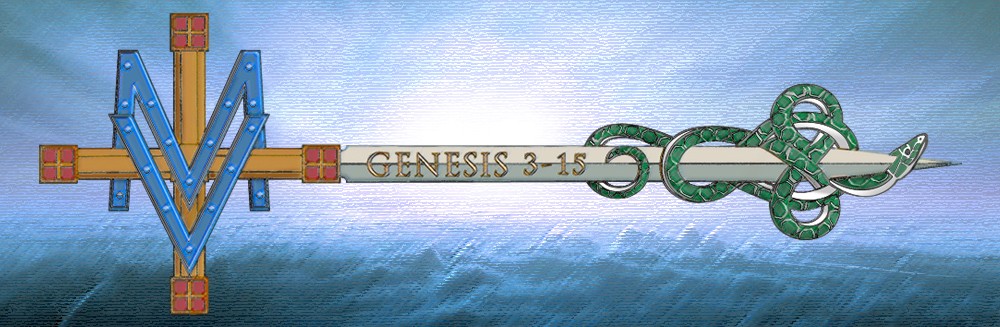
I will put enmities between thee and the woman, and thy seed and her seed: she shall crush thy head, and thou shalt lie in wait for her heel.

It is all right there.  That is why Genesis 3:15 is called the first gospel (protoevangelium).  Everything that comes after is all fulfillment, partially at first by way of types (Judith, Esther and the Ark, for example), and then in the fullness of time the Woman and Her Seed bring all things to fulfillment, waging war against the Dragon on the top of the world in the greatest eucatastrophe of all time.

St. John’s vision on Patmos of the Woman gloriously arrayed with the lights of heaven, but militantly in travail, projects into the past, present and future the tribulations of the People of God.  The birth pangs are not of Bethlehem, but of Calvary.  It was only at the foot of the Cross that the Virgin suffered in the throws of delivery.  But surely there is an intimation of Bethlehem in this reference to birth, just as there must be an allusion to the flight into Egypt in the words And the woman fled into the wilderness (v. 6), though the primary reference is the cosmic battle with Satan and the rest of the fallen host.

But St. John was also speaking to the churches of his own time that were suffering persecution and were plagued by heresy.  In the breathless voice of the Holy Spirit, the Apostle proclaims: He that hath an ear, let him hear what the Spirit saith to the churches.

But it is more than that.  The Woman is the promised Victrix, Mary the New Eve, dolorous and glorious, in Her earthly adventure and in Her heavenly reward.  She also represents the churches, the direct recipients of St. John’s revelation, addressed directly in his cover letters to the seven churches.  But She is also the Church Militant of every age that suffers persecution and is plagued by heresy.  Further still, the macrocosm of the Church Militant is reflected in the microcosm of each and every soul, where the Woman and the Dragon contest each other’s dominion.

Lepanto is a parable, a recapitulation of the protoevangelium, just as are the history of Judith and Mary and the churches which St. John addressed.  But so are the chronicle of the Battle of Viena, and the Epics of Tepeyac and Rue du Bac, and more poignantly for our own day, the prophetic history and parable of the Acts of Our Lady of Fatima.  These are the macro-eucatastrophes of the ages, which spell out in the sky, in the medium of light and miracle, the even more fundamental reality of the micro-eucatastrophes (hopefully) going on within our moral and spiritual lives.

The hateful spirits of, pride, greed, lust, anger, gluttony, envy, and sloth claw at the doors of our hearts, or worse, live within them.   We are kingdoms under siege or kingdoms fallen.  We make so much of the macro and so little of the micro and for that we are recipients of the terrible apocalyptic reprimand:

But I have somewhat against thee, because thou hast left thy first charity. Be mindful therefore from whence thou art fallen: and do penance and do the first works. Or else I come to thee and will move thy candlestick out of its place, except thou do penance (v. 4-5).

Perhaps I am all washed up for my secret regret.  Perhaps the Church knows better than I.  Of course she does!  The collect for today’s feast and for every Rosary asks for the grace to transform the vision of truth seen through the eyes of the Victrix into Her very life within us:  that meditating we might imitate.  That is the fundamental art of war upon which all strategies and tactics depend.  Perhaps the bellicose language has been pealed away from the orations because we tend win a few of the battles we do see, while loosing the war we do not see.  The Third Part of the Secret of Fatima is bellicose and macro enough, but it all hinges on individuals, and therefore on praying and living the Rosary more than anything else.

Both St. Pius V and Don Juan prayed the Rosary.  Together they were victorious, inside and out.  Men of Prayer and Action, yes, but in all in its proper order.  The Third Part of the Secret at Fatima refers to realities both micro and macro and in that order.

The Spirit of Lepanto is the Spirit of Mary Victrix.  It (She) is a living ideal that communicates itself (Herself) from Heart to heart.  It is vital and preeminently dangerous, boundless and indomitable.  It is also the Spirit of the White Horse, upon which rides the KING OF KINGS AND LORD OF LORDS, whose head is crowned, whose eyes are fire and out of whose mouth comes a sharp two-edged sword.  The Woman of chapter 12 is the Lady, who girds of the Knight in chapter 19 of St. John’s revelation.  And together they constitute a power, beyond which cannot be conceived.

The great prophetic grace of our age is the message of the modern Marian apparitions, which, as already said, are recapitulations of the protoevangelium, but with this twist:  we live in the most apocalyptic age and the urgency of the prophetic plea for devotion to Her Immaculate Heart is the voice of the Spirit speaking to the churches right now!  St. Louis de Montfort says of the Marian Apostles of the Latter Days that

[t]hey will be ministers of the Lord who, like a flaming fire, will enkindle everywhere the fires of divine love. They will become, in Mary’s powerful hands, like sharp arrows, with which she will transfix her enemies (56).

The enemies of Mary are, in a sense, transfixed with the same sword that has pierced Her heart.  Her apostles know the point of that sword all too well, with memories both bitter and sweet.  It is swordplay that is well-landed upon both friend and foe.

Fatima is a modern-day apocalypse.  No wonder there in October the Woman revealed herself to be Our Lady of the Rosary and was clothed with the whirling sun.  It’s spirit is the Lepanto of our age, that transhistorical category of the spirit that is both the first promise to mankind and the patrimony of this last age.  However we name this Spirit, it is bigger than the histories in which it enshrined and deeper than the hearts in which it works itself out.

We can continue to bang out solutions of our own contriving that satisfy our egos, like clever soundbites and slogans, and rely on rhetoric and imprudent zeal, or we can look into the skies, indeed, into the Temple of God and make all things according to the pattern shown us on the mount (cf. Hebrews 8:5).  If we do not see this vision and strive to embody it in our own lives, we have not understood, or have refused to understand the parable of Lepanto and the spirit of this feastday.

If you have not made the consecration to the Blessed Virgin, I pray you do, and soon.  Don’t only pray the Rosary, live the Rosary.

Oremus pro invicem, and sing

I cast myself before Thee, Thy bondsman and Thy fool;
Thy patronage is freedom, Thy slavery my school.
I offer Thee my sword hilt and wait for Thy command
To serve among Thy servants who pledge to take a stand.
That I might die in battle, a victim of Thy love:
My wish, my prayer, my promise, thus written in my blood.

I saw the bark of Peter ride dark into the sun,
But darker still the marking of crescent, hoard and gun.
Her sails lay flat and mellow, Her men had pledged their troth,
Left hand on beaded psalter, the right to keep their oath.
The haughty fiend had counted on fear to win the day,
But Thine own breath has countered to turn the wind their way.

My Queen, to Thee be honor and praise through all Thy knights
Who toiled and bled and parted Thy martyrs robed in white.
All courtesy and prowess, all strength and gentleness,
Thy heart a pyx of virtue, Thy face all loveliness.
Then at the hour of judgment my colors Thou may see,
Thy Son upon His white steed, Thou pray to come for me.

Happy Feast of Mary Victrix.

Encampment Version 2.0 in Development

The Fall Father and Son Encampment has been cancelled for a number of reasons, not least of which is my current status of living mostly in New Bedford until November when a new Guardian will arrive to take over the run of the house there.  It may be a good time to take a break anyway, as we have been tossing ideas around about how to make the Encampments better and the preparations more manageable.

Right now we are talking about taking the weekend “off campus,” so to speak to a campground and conducting perhaps one larger event every year, instead of three smaller ones.  (We will continue to use the obstacle course at the friary for other events.)  I would also like to open the Encampment to boys who have no fathers (or fathers who are involved with them at this level), since fatherlessness is a big problem and one that has long concerned me.

Please pray for the Knights of Lepanto who have worked so hard to make these encampments a success.  We have had a great deal of positive feedback and are very much encouraged.  We hope to have something really great, innovative and powerful in the Queen of Lepanto to present for next year.  I will keep you all abreast of the developments from this forum.

Thank you for all your support and please spread the word about next years open encampment.

The Holy Grail on Standing Fast

Templar Secrets, Part 3:  The Holy Grail

Posted on AirMaria and found on this blog in the sidebar.

For the introduction, in case you missed it, you will also find it in the side bar, or follow this link.